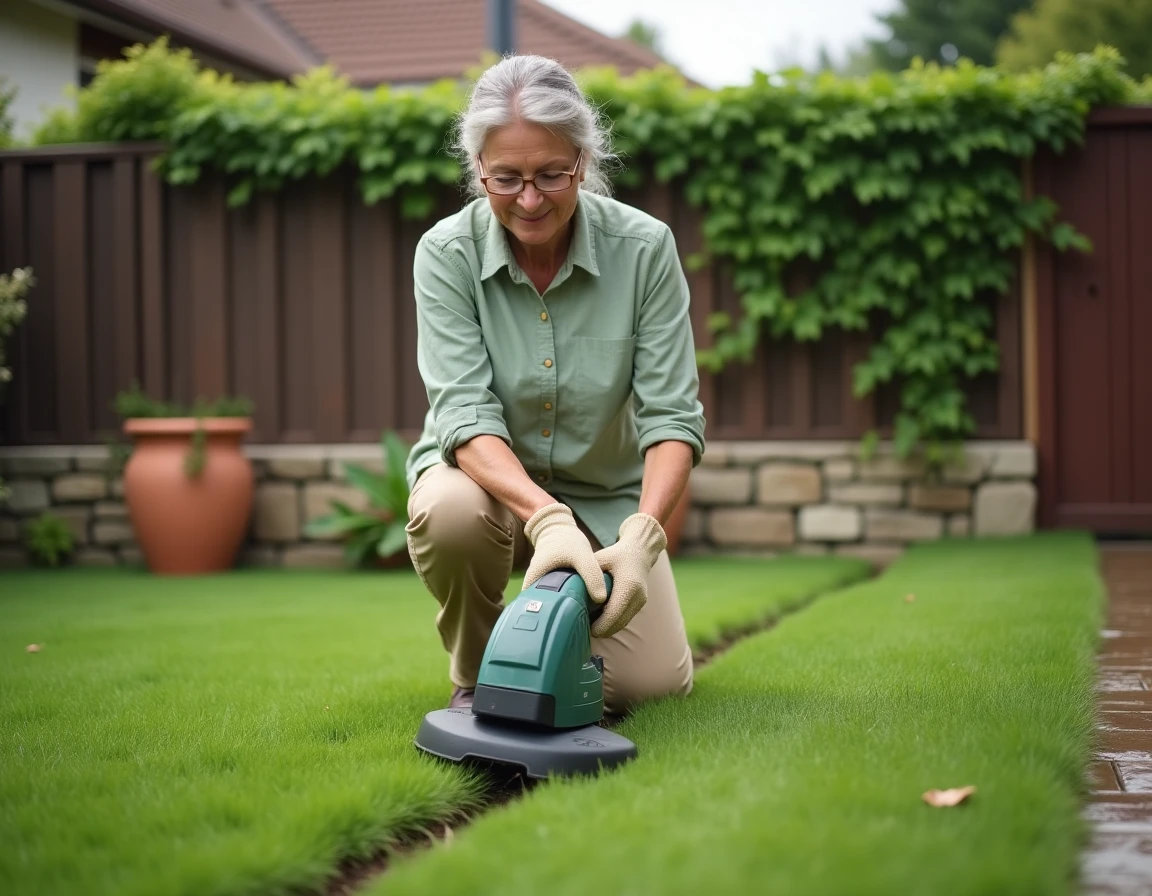
The string trimmer market has changed dramatically in just a few years. Electric, corded, and battery-powered ranges now cover uses that were recently the domain of gas-powered models. Shared battery platforms are becoming common among most manufacturers, and brushless motors are altering the relationship between power and perceived fatigue. In this context, choosing a suitable device relies less on the type of energy than on a handful of technical criteria that are often poorly prioritized.
Brushless motor and shared platform: what really changes user comfort
Classification by energy source (corded electric, battery, gas) remains the most common in buying guides. However, it overlooks a crucial parameter for real comfort: motor technology.
Recent models equipped with a brushless motor offer better energy efficiency, less vibration, and often a reduced weight balance. The test of the Einhell GP-CT 36/35 Li BL-Solo illustrates this compromise between power, autonomy, and comfort, where motor technology becomes a selection criterion on par with cutting width.
The other significant evolution concerns shared battery platforms. The same 18 V or 36 V battery powers the trimmer, mower, blower, and other garden tools. The gain is measurable on two levels: fewer chargers to store, and a reduced overall usage cost if you already own other devices from the same brand.
Before comparing unit prices, checking compatibility with an existing ecosystem remains a more cost-effective reflex than seeking the best isolated technical specifications. Resources like taille-bordure-warrior.com allow you to cross-reference these compatibility criteria between models.

Electric string trimmer for semi-intensive work: where is the limit
For a long time, recommending a gas-powered device for long borders, sloped terrains, or tall grasses was a given. This is no longer systematically true. Stihl positions its FSE 52, a corded electric model, for occasional maintenance work around the house and garden, including in areas that would have previously justified a gas engine.
The question is not whether electric “matches” gas in absolute terms. It concerns the threshold beyond which the power and autonomy of a corded or battery-powered model are no longer sufficient. Field feedback varies on this point depending on soil type, vegetation density, and maintenance frequency.
Guidelines to situate your usage
- Regularly maintained lawn with borders along paths or flower beds: a corded electric or battery model largely meets the need, with less noise and no fuel constraints.
- Moderately sloped terrain, grasses occasionally reaching above the ankle: 36 V batteries with brushless motors hold up, provided you have a battery of sufficient capacity.
- Fallow land, brambles, dense undergrowth over large areas: gas or brushcutters remain the most reliable option for prolonged uninterrupted use.
A common pitfall is to oversize the device. A gas string trimmer in a modest-sized garden generates unnecessary weight, more pronounced vibrations, and engine maintenance (spark plug, filter, mix) that most individuals neglect.
Cutting line and cutting width: the underestimated parameters
The type of line and cutting width determine finishing quality as much as the motorization. A line that is too thin breaks on tough grasses. A line that is too thick puts more strain on the motor and reduces autonomy on battery models.
The cutting width determines the number of passes required. An appropriate cutting width reduces working time more noticeably than an excess of motor power. For narrow borders along a wall, a compact cutting head offers more precision. For wide grassy strips, a generous cutting diameter saves several minutes per session.
Criteria to cross-check before purchase
- Diameter of line compatible with the cutting head: check the range accepted by the device, as an incompatible replacement line degrades performance.
- Line feed system (automatic, semi-automatic, manual): automatic feed limits interruptions and handling, reducing fatigue during long sessions.
- Total weight in working order (with battery if applicable): a lightweight and well-balanced device tires the arms and back less, especially after more than twenty minutes of continuous use.
- Adjustable handle and possible harness: the ergonomics of the grip matter as much as the gross weight for real comfort.
String trimmer maintenance: what determines lifespan
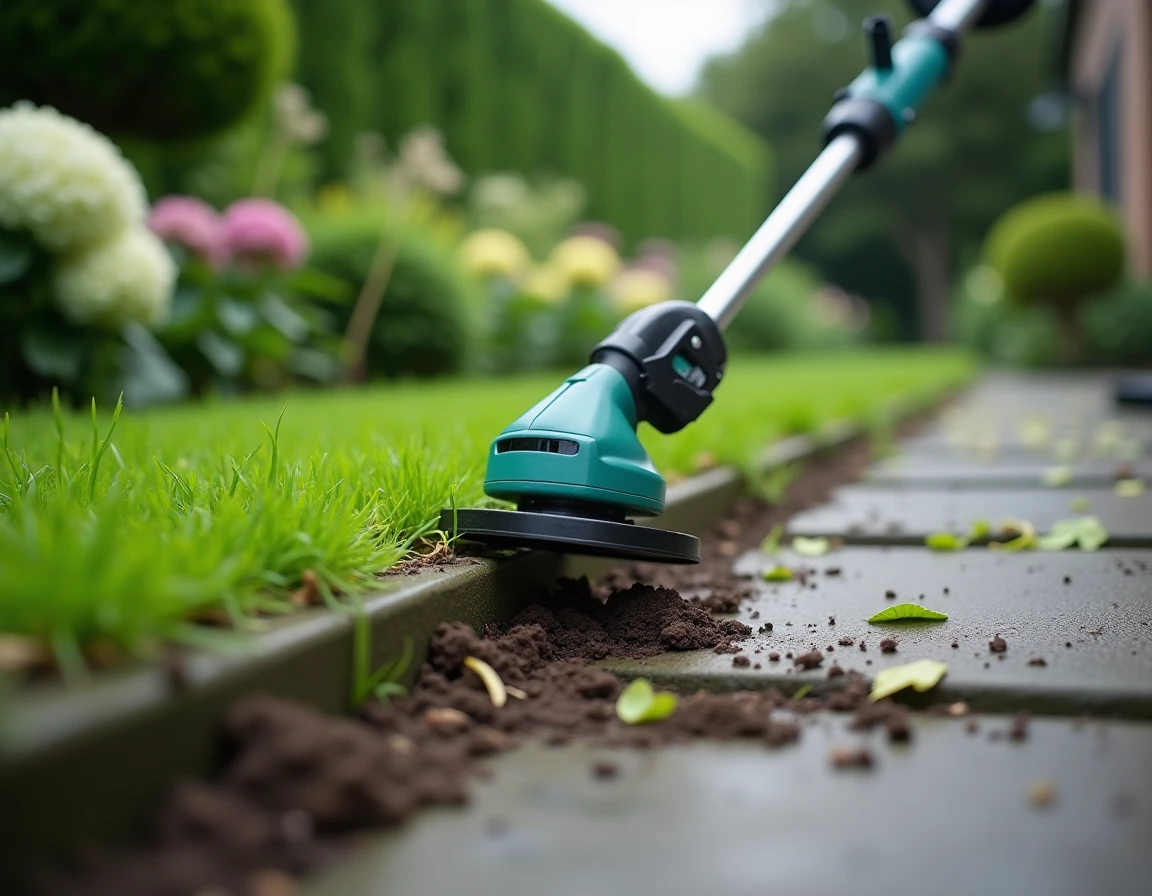
A poorly maintained device loses efficiency long before its motor fails. On an electric model, the weak point remains the cutting head: compacted grass residues, tangled line, housing cracked from a collision with a stone edge.
On a gas model, the maintenance of the air filter and spark plug determines starting at the beginning of the season. Many reported failures in stores stem from simple clogging after winter storage without cleaning.
For battery-powered devices, storing the battery above freezing and at partial charge extends its capacity over several seasons. Leaving a lithium-ion battery completely discharged for several months accelerates its degradation.
Choosing a string trimmer is not just about comparing power or ranking by price. The battery ecosystem, motor technology, and real ergonomics weigh more heavily in daily user comfort than a simple reading of technical specifications suggests.
Check compatibility with your existing tools, assess the surface and nature of your terrain, and then prioritize a device that you can maintain without hassle: these three checks guide you towards a sustainable purchase from the first season.