
When your oven starts making strange noises, it may be a sign of a malfunction that requires your attention. Clicking, buzzing, or hissing sounds can indicate several issues, ranging from a loose component to a defective part. Identifying the source of these sounds can be a challenge, but it is a fundamental step before you can resolve the problem. A basic understanding of your oven’s mechanics and a methodical approach to testing the various functions can help you locate the cause and determine whether a home repair is possible or if professional intervention is necessary.
Diagnosing Unusual Noises from Your Oven
Understanding the noise disturbances from your oven is the first step towards a worry-free use of this appliance. While the oven may naturally produce sounds during operation, unusual noises deserve special attention. A hissing or popping sound may be an early warning of a struggling part or a mechanism that is deviating from its primary function. For example, the convection fan, essential for even temperature distribution, can cause noises if its blade is unbalanced or obstructed.
The noise can also emanate from the cooling fan, which, although designed to operate after the oven is used to ensure cooling, may persist at inappropriate times and signal a malfunction. A faulty mechanical clock could also manifest as a regular ticking noise, while issues related to the thermostat might require a reset or replacement to restore silence and heating efficiency.
Noises can also reveal more technical issues, such as a faulty switch that could activate the cooling fan unnecessarily, or a damaged circuit board that requires replacement to restore the appliance’s nominal performance. Knowing how to identify and resolve abnormal noises from your new oven becomes a task that could save the appliance from a more serious and costly failure.
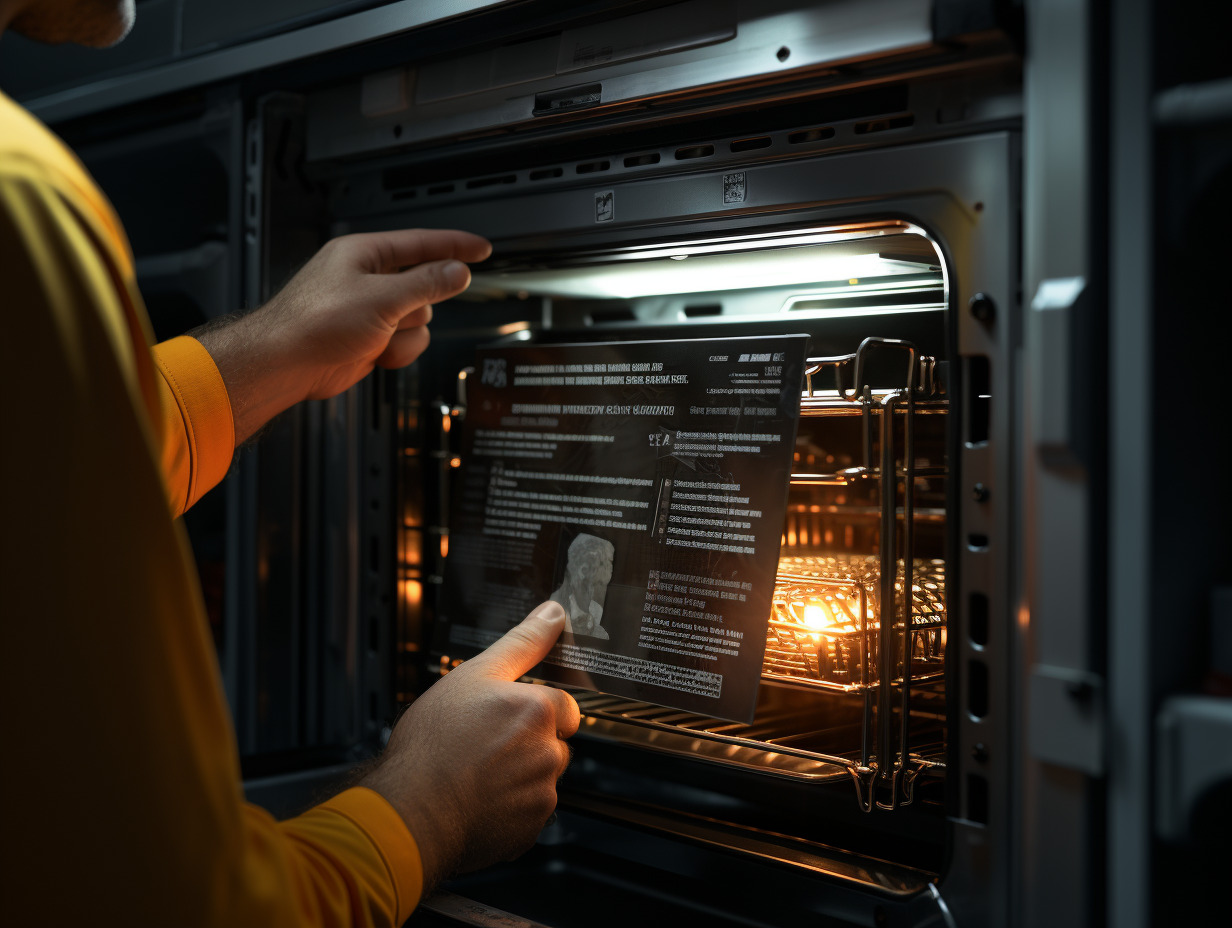
Practical Guide to Resolving Unusual Noises from Your Oven
A necessary preamble to any intervention, safety dictates that you unplug your oven before beginning any troubleshooting. This preventive action avoids accidents and ensures safe handling of internal components. Make sure the appliance is completely powered off before proceeding.
Once safety is assured, you can proceed to a thorough examination of the elements that may generate noise. Start with the convection fan: check its cleanliness and alignment. The presence of debris or a misaligned blade can cause noise. Cleaning or simple lubrication may resolve the issue. The cooling fan, in its continuous quest for thermal dissipation, also deserves your attention. Ensure that it is not running unnecessarily, a possible sign of a faulty switch.
If the noise is coming from the mechanical clock, a regular ticking would indicate the source of the disturbance. A readjustment of the clock may be enough to restore silence. If the issue comes from the thermostat, a more in-depth diagnosis is warranted, which could lead to a reset or replacement of the part.
Sometimes, the heart of the problem lies in the circuit board. If damaged, it can cause various malfunctions, including the untimely activation of certain components. Its repair is delicate and often synonymous with replacement. If none of these solutions bear fruit, the question of replacing the oven arises. An appliance resistant to repairs is no longer a guarantee of performance or safety. Weigh the costs and benefits of investing in new equipment against the futility of trying to fix a declining oven.