
Some figures are disturbing: in France, platforms charge fees even for exchanging free items, while the vast majority of exchanges between individuals happen without intermediaries. However, bartering is not just surviving in the shadow of e-commerce; it is gaining ground. In the face of rising online shopping, many now prioritize sharing, recycling, and resourcefulness. Industry players are multiplying ideas: making exchanges more accessible, securing transactions, and expanding choices. All this, without losing sight of the goal: simplifying users’ lives and giving meaning to the circulation of goods. From applications to generalist sites, access to useful or unique items no longer depends solely on budget, but on the desire to circulate what lies dormant at home.
Why bartering is increasingly appealing to individuals in France
The dynamic that currently drives bartering in France reflects a profound shift in usage. People are less focused on buying new than on reviving neglected items, stepping away from the endless cycle of overconsumption. Those who take the plunge no longer act solely for economic reasons: they embrace the choice to promote reuse and the circulation of goods, motivated by a rejection of waste. Behind the words novelty or modernity lies a concrete aspiration for a circular economy: here, each item regains value as it changes hands, connects new users, and builds a collective and local fabric.
Illustrating this evolution, the platform trokers.net has emerged as a reference in the sector. Books, accessories, clothing, or equipment: on this site, it becomes natural to prioritize exchange over sale. We see the flourishing of virtual currency systems that facilitate negotiation and smooth exchanges, even when direct bartering is not possible. This idea is accompanied by a desire to strengthen trust, make each transaction transparent, and reflect on the ecological impact of our choices.
Choosing to exchange is not just about consuming differently: it is about cultivating real connections, betting on resourcefulness, and multiplying micro-solidarity solutions in the face of the limits of a linear economy. Far from a nostalgic return to the past, bartering establishes itself as a contemporary response to concerns about sobriety, equity, and proximity.
What are the concrete advantages of exchanging items rather than selling them
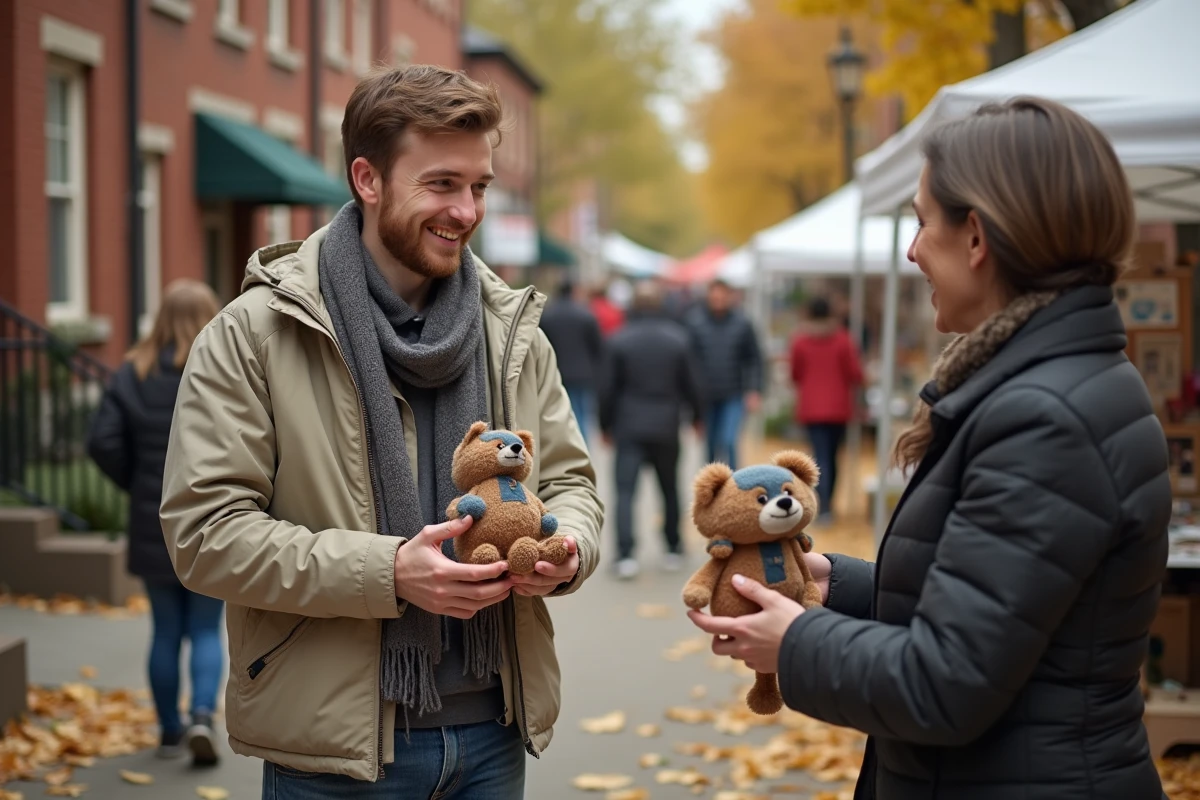
When an item changes hands without passing through the filter of money, a whole new relationship with ownership is reinvented. Bartering places meeting and mutual aid at the heart of the transaction. This model gives rise to unexpected short circuits, where immediate needs meet unused resources elsewhere. A book for a plant, a jacket exchanged for a service, these selfless transactions create bonds and give meaning to what had lost it.
This functioning produces several tangible benefits:
- Strengthening of local relationships and mutual aid, even among complete strangers
- Less dependence on money, with fair, flexible, and sometimes unconventional exchanges
- Direct integration into a collaborative economy that values local resources
- New appreciation for neglected items, which find new uses without becoming waste
Another concrete advantage: simplicity. The platform does not charge a commission, and the circulation of items accelerates without the waiting or constraints of traditional selling. For those who give or receive, the approach is liberated, unencumbered; each shared item becomes a responsible gesture, serving a more reasoned and inventive consumption.
The best bartering and exchange platforms for making good deals with confidence
The digital market for bartering has become structured: today, there are platforms capable of orchestrating thousands of exchanges, with tools designed to reassure and facilitate. One of them, already mentioned above, stands out for its ability to combine intuitiveness, speed, and security of transactions: well-designed interface, transparent evaluation, responsive customer service. Thanks to an alternative currency system, it allows exchanges that we wouldn’t have suspected ten years ago.
Here are categories of items and services that can be exchanged or offered:
- Books, DVDs, retro video games, Blu-rays
- Plants, seeds, gardening tools and supplies
- Clothing, beauty products, and even food items
- Various services, homemade recipes, cultivation spaces
This classification facilitates search, allows everyone to focus on what they really need, while developing a local and circular economy. No hidden fees, constant transparency: enough to gain the trust of an ever-growing number of users eager to break free from the cycle of impulsive buying and disposability.
Exchanging has gone beyond the stage of occasional tinkering. It has captured a generation tired of accumulation, who prefer to circulate rather than hoard. Nothing utopian: tomorrow, it may be your own items that gain a new life, carried by the silent momentum of modern bartering.