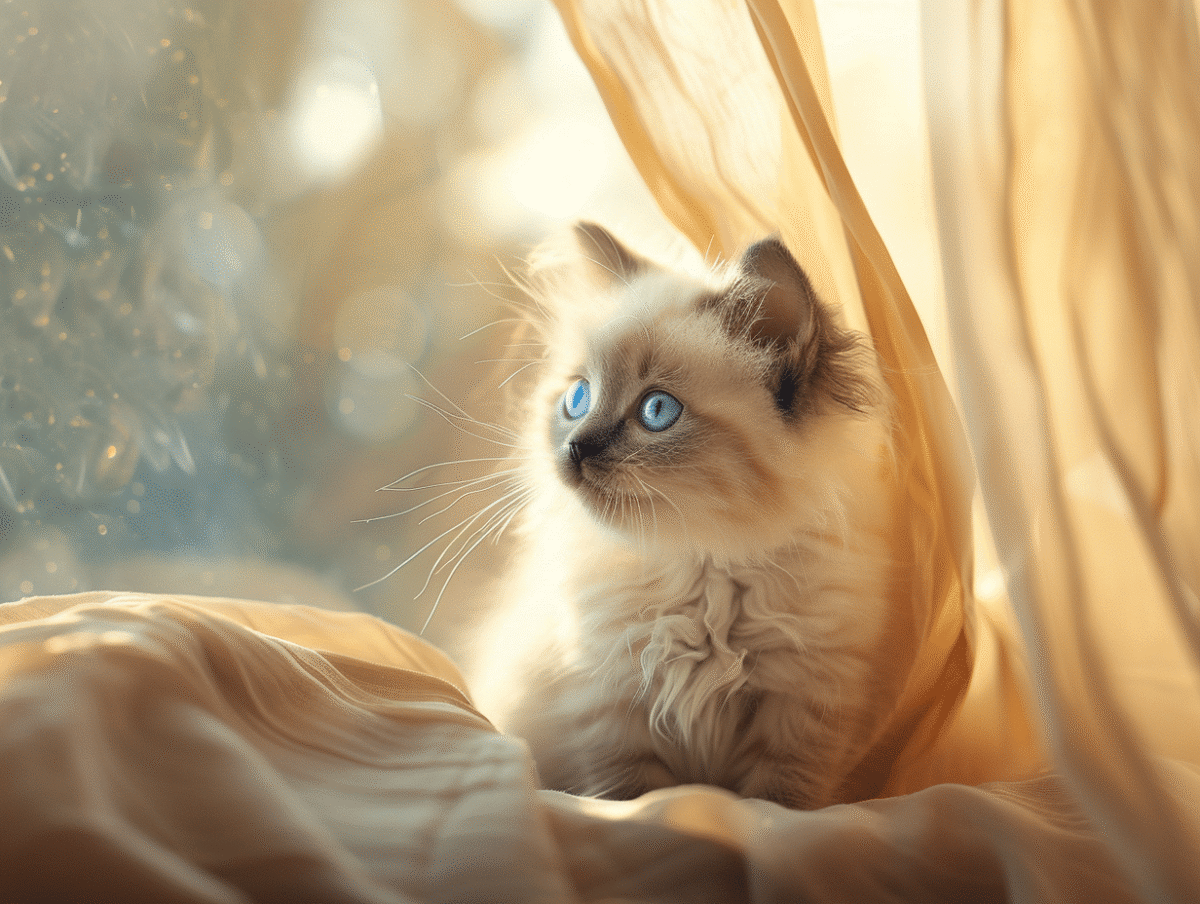
From their birth, kittens embark on an exciting visual journey, transitioning from total darkness to a colorful and detailed vision. The eyes of young felines, initially closed, gently open after about ten days. At this moment, the world reveals itself to them, but only in shades of gray. Over the weeks, a spectacular metamorphosis occurs: their irises take on vibrant and diverse hues, and their perception sharpens. This captivating phenomenon reflects the complex evolution of visual development in mammals and highlights a remarkable adaptation to their environment, a fascinating aspect of their growth.
The process of eye metamorphosis in kittens
The metamorphosis of eyes in kittens begins as they start to crack open their eyelids. At birth, a blue-eyed kitten is a common sight, this color being almost universal among newborns. But this hue is not permanent. Melanin, the pigment responsible for iris coloration, begins to accumulate gradually. This process, dependent on the genetics of each individual, leads to a potentially visible transformation from the initial blue eyes to a variety of colors.
As the kitten grows, the level of melanin in the irises increases and can result in color changes. Green or hazel eyes may appear as the kitten reaches adulthood. The eye color of kittens can change with age, a fascinating fact that illustrates the complexity of feline development. These chromatic modifications are not just aesthetic; they can also reflect the cat’s eye health. Certain diseases can affect eye color, sometimes indicating concerns that need to be monitored closely.
The change in eye color, although mostly natural, can be an indicator of the cat’s health status. Owners should closely observe the ocular development of their feline companions, as any unexpected change may signal an anomaly requiring veterinary assessment. Consider that the eye color of kittens is another indicator in their medical follow-up, an element not to be overlooked in the overall context of their well-being.
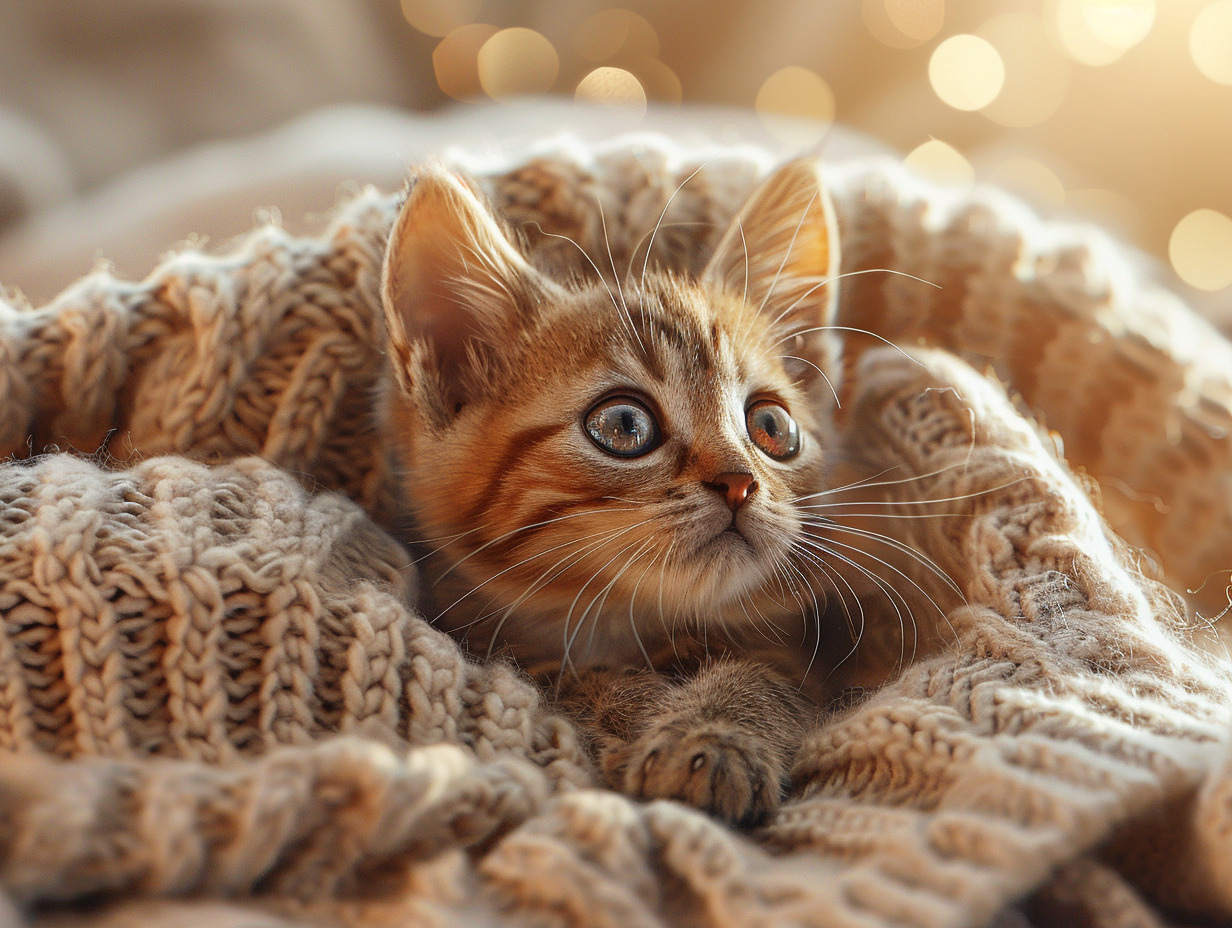
The implications of eye transformation on cats’ perception and behavior
The vision of cats is a complex and fascinating subject. With a visual perception adapted to their evolutionary needs, cats possess a wide field of vision, extending up to 260°, and an ability to detect the slightest movements, essential to their predatory behavior. Their night vision is particularly sharp, far surpassing that of humans, thanks to the tapetum lucidum, a layer of tissue that reflects light through the retina, thereby increasing the amount of light available to photoreceptors.
The retina of cats, rich in rods, is optimized for vision in low-light conditions, contributing to this extraordinary night vision. The cones, although fewer in number, allow for color perception, albeit limited. Indeed, cats are primarily dichromatic, meaning they have a different color perception than humans, with heightened sensitivity to shades of blue and green, while red hues are less perceptible to them.
The impact of kitten eye metamorphosis on their perception and behavior is significant. As they develop, the maturation of melanin in the iris can influence the amount of light reaching the retina, and consequently, the cat’s visual ability. The changing shape of the pupil, which shifts from vertical slits in bright light to round openings in darkness, allows for precise regulation of the amount of light entering the eye, fundamental for their visual adaptability.
The behavior of the cat is closely linked to its visual perception. The ability to detect fleeting movements is central to hunting and exploring their environment. The sensitivity to movement is an asset for felines, allowing them to react quickly and accurately to prey or threats. The transformation of eyes during the growth of kittens is not just a physical change, but it also shapes their interaction with the world around them, defining their role as agile and observant predators in the ecosystem.