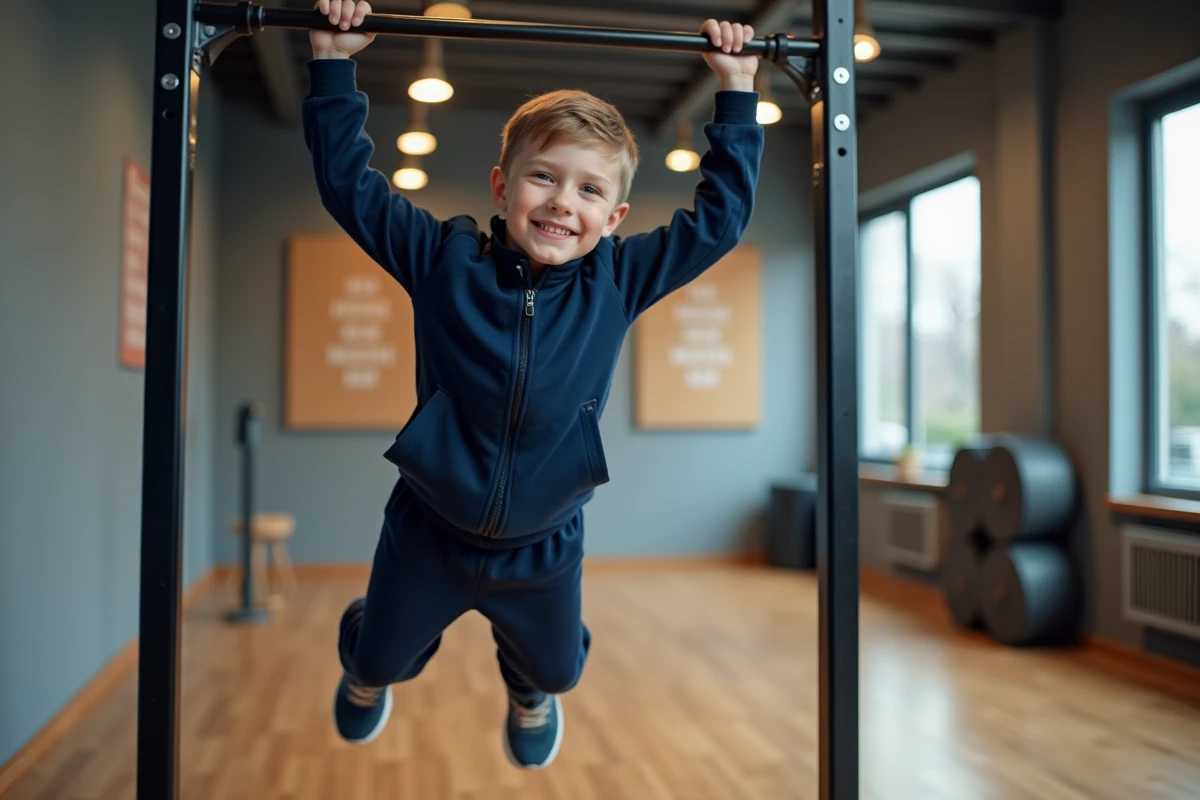
No one has ever really set the ideal age to catch a first bar. In France, no law prevents minors from training, yet many clubs close their doors to those under 16. Opinions vary among specialists: some encourage supervision starting at age 12, while others call for more maturity before taking action.
Calisthenics, this practice that engages the entire body without machines or weights, is attracting more and more passionate young people. On the field, teenagers find a concrete way to improve their motor skills and confidence. Studies remind us that with gradual progression and a framework, nothing hinders growth or skeletal development, provided that the rules of the game are respected.
At what age does strength training find its place among young people?
Determining a universal age makes little sense. What matters is each individual’s pace, the ability to listen to their body, and of course, the support. According to professionals, many young people can start light weight training as early as 12, sometimes even a bit earlier, as long as a playful and safe dimension is maintained.
Imitating an adult’s program without thinking would be more about recklessness than effectiveness. It’s better to prioritize bodyweight exercises: pull-ups, push-ups, planks. They refine coordination, improve posture, and encourage consistency. Light dumbbells, under supervision, help familiarize with the technique. Before age 15, aiming for performance or load makes no sense. The priority? Learning the right moves, having fun, and staying attuned to one’s sensations.
Here are the guidelines that specialists most often mention:
- Between 8 and 12 years old, it’s primarily about playing and discovering, without pressure.
- From 12 to 15 years old, a bit more structure and intention are introduced, with the supervision of a coach or educator.
- After 15 years old, it becomes feasible to enter into more traditional weight training, taking care to vary sessions and promote technical learning.
Patience, diversity of exercises, and respect for personal rhythm guide solid athletic development. For those who want to delve deeper into this issue or know the best times to start pull-ups, just learn more about the age of traction.
Common misconceptions: safety, growth, and evolution during adolescence
Some parents still have concerns: what if pull-ups hinder growth? However, studies point in the same direction. Conducted with gradual progression and under professional supervision, strength training has no harmful impact on height or the skeleton. It’s the excess, lack of rest, and absence of supervision that pose problems.
The winning formula remains simple: regular physical activity, solid sleep, balanced nutrition. In this context, pull-up exercises and strength training become real assets. Young people feel more energetic, improve their posture, refine their coordination, and boost their confidence. The benefits go far beyond mere muscle fiber: psychological well-being, resilience to stress, better effort management.
To ensure training yields results without unpleasant surprises, here are the basics to always establish:
- Progress step by step by choosing exercises appropriate to the age and level of the young person.
- Pay attention to breaks and recovery to avoid burnout.
- Introduce fun and varied moments, as enthusiasm remains the best motivation at this age.
Integrated into this healthy lifestyle, strength training supports growth instead of hindering it. Staying attentive to one’s feelings, varying movements, and not hesitating to seek guidance from an educator provides all the guarantees for harmonious development. Pull-ups, planks, dips: all simple exercises that can be adjusted according to one’s abilities, laying a solid foundation for the future.
Choosing the right workouts: focus on progression and consistency
What matters more than intensity is the intelligence of the training. Calisthenics, with its versatility, offers movements that engage strength, flexibility, and coordination. Push-ups, pull-ups, dips stimulate multiple muscle chains and easily integrate into a routine, whether solo or in a group.
Gentle strength training sometimes relies on minimal weights, bands, or light dumbbells. It emphasizes movement mastery, works on deep musculature, and significantly reduces the risk of injury, particularly useful during adolescence, a time of rapid changes.
For successful sessions, a few simple rules
Here are the principles that allow for progression without risking injury or boredom:
- Focus on global movements: pull-ups, push-ups, squats engage the entire body in a balanced way.
- Maintain two to three sessions per week, without aiming for overload, so the body has time to adapt.
- Consider incorporating mobility exercises and stretching to maintain the range of motion and joint flexibility.
Pull-ups, the core of these workouts, build useful and adaptable strength. A simple bar at home or in the park is enough; consistency and enjoyment do the rest. No need for expensive equipment or spectacular targets: advancing step by step, feeling the progress, and appreciating the journey is what makes all the difference. For many, this is where a true sports and personal adventure begins, gradually shaping the taste for effort and balance in life.